

Feature Article

Los mejores sacaleches portátiles de 2026: libertad manos libres para mamás ocupadas

Horario de Extracción Exclusiva: Todo lo que Necesitas Saber

Lactancia con pechos pequeños: ¿El tamaño de los pechos afecta la producción de leche?

Lactancia con pechos pequeños: ¿El tamaño de los pechos afecta la producción de leche?
Latest Article

Top 10 Sacaleches Más Fiables de 2026 (Elección de Padres)
Choosing the most reliable breast pump is about more than just suction; it’s about finding a partner that supports your breastfeeding journey without fail. In this guide, we break down the top 10 most dependable models of 2026, headlined by the Momcozy M5 Smart, which combines "Baby Mouth" technology with the convenience of app-controlled tracking. We evaluate these pumps not just on their performance, but on the long-term peace of mind provided by the best warranty breast pump policies and the best customer service breast pump support teams.
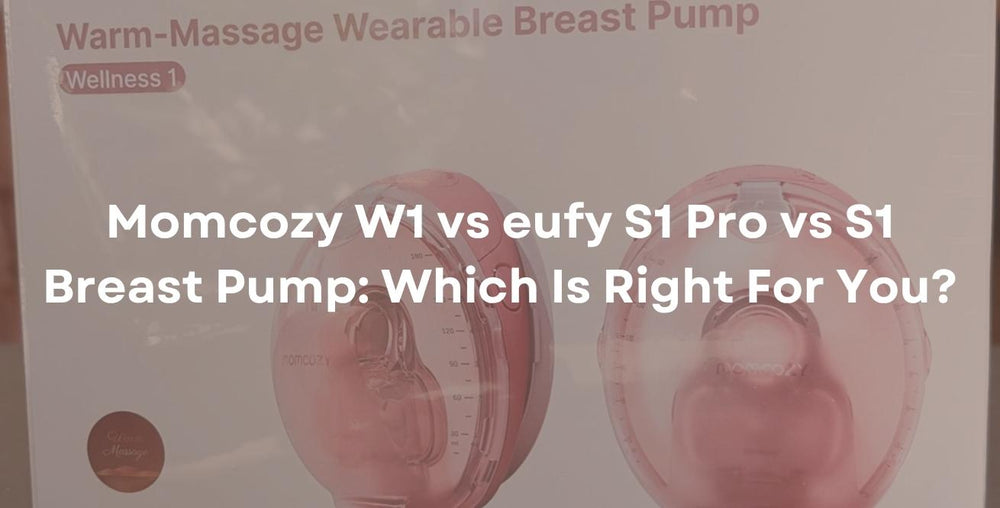
Momcozy W1, eufy S1 Pro y S1: ¿cuál es la más adecuada para ti?
¿Indecisa entre tantas opciones? Comparamos a fondo Momcozy W1, eufy S1 Pro y S1 para que descubras cuál es la más adecuada para ti. ¡Lee la guía hoy!

Pumping After Breastfeeding: When It Helps, How Long to Wait, and Which Pump Fits
Pumping after breastfeeding can be useful, but it is not necessary for every mom. If your baby nurses well, gains weight appropriately, and you do not need extra milk, you usually do not have to pump after every feeding. It can make sense when you want to build a small freezer stash, prepare for returning to work, relieve occasional fullness, or support milk production in a targeted way. This article explains when pumping after nursing is helpful, how to plan it without unnecessary stress, what mistakes to avoid, and how a wearable breast pump such as the Momcozy Air 1 Ultra-slim Breast Pump can support a flexible breastfeeding and pumping routine. Quick answer: Should I pump after breastfeeding? You do not need to pump after every breastfeeding session if your baby is feeding well and you have no specific reason to collect extra milk. Pumping after nursing can be helpful if you want to store milk, prepare for daycare or returning to work, increase stimulation temporarily, or collect a small amount for another caregiver. If you pump too often without a clear goal, you may create extra pressure or encourage more milk production than you actually want. Your goal When pumping after nursing may help What to watch for Building a small freezer stash Occasional short sessions after nursing or between feedings Small amounts are normal, especially after the baby has already fed. Returning to work Planned pumping times that fit your workday and your baby’s feeding rhythm A consistent routine is more important than long, stressful sessions. Supporting milk production Short extra sessions may be useful in some situations Discuss ongoing supply concerns with an IBCLC, lactation consultant, or healthcare provider. Relieving fullness Brief pumping or hand expression can soften the breast Avoid fully emptying too often if you are prone to oversupply. Why the amount after nursing is often small Many moms worry when they pump only a small amount after breastfeeding. In many cases, this is completely normal. If your baby has just nursed effectively, much of the available milk has already been removed. The amount collected afterward does not automatically show how much milk you make in total. Milk output also depends on time of day, stress, your let-down response, flange fit, and how well your body responds to the pump. Some moms get more milk in the morning, while others pump more at a different time. A single pumping session should therefore not be used as the only measure of milk supply. When pumping after breastfeeding can be useful Pumping after breastfeeding is most useful when it supports a clear goal. If you want to collect a small amount of milk for later, a short session after one or two feedings may be enough. If you are preparing for returning to work, it may be more helpful to establish a regular pumping routine that mirrors the times your baby will receive bottles. It can also be useful when you and your lactation consultant decide that additional stimulation is appropriate. Because breast milk production responds to demand, extra milk removal can sometimes encourage the body to make more milk. However, more pumping is not automatically better. Too much stimulation can lead to oversupply, discomfort, leaking, or clogged ducts in some moms. Useful situation Possible approach US-localized note You need milk for daycare Add one predictable pumping session during the day Label stored milk with the date and follow CDC storage guidance. You are returning to work Practice pumping before your first workday Plan where you can pump, clean parts, and store milk safely. You want a small freezer stash Collect small amounts over several days You do not need large amounts at once; small portions can add up. You are trying to increase supply Add short sessions carefully and track comfort Seek professional support if output remains low or baby’s weight gain is a concern. How long should you wait after breastfeeding before pumping? There is no single waiting time that works for every mom. If your goal is to collect a small amount in addition to direct nursing, waiting about 30 to 60 minutes after a feeding may be practical. This can give your body time to begin refilling while still keeping the next nursing session comfortable. If you are replacing a feeding because you are away from your baby, the timing should follow your baby’s usual feeding rhythm more closely. In that case, the pumping session is not simply “after breastfeeding,” but a replacement for a nursing session. If your goal is to increase supply, timing should ideally be discussed with an IBCLC or lactation consultant so you can avoid unnecessary stress or oversupply. How long should a pumping session after nursing last? A short session is often enough when you are pumping after a full breastfeeding session. Many moms begin with around 10 to 15 minutes and then adjust based on comfort, output, and the reason for pumping. If only a few drops or a small amount comes out, that does not automatically mean the session failed. Your baby may simply have already removed most of the available milk. Longer sessions are not always better. If pumping becomes painful, stressful, or causes nipple irritation, the routine should be changed. Comfort, flange fit, and a realistic schedule matter more than forcing longer pumping times. What to consider before adding pumping after every feeding Pumping after every breastfeeding session can be useful in certain situations, but it should not become an automatic rule for every mom. If a healthcare provider or lactation professional recommends it because your baby needs additional milk or you are working on supply, then a structured plan may make sense. Without that kind of goal, pumping after every feeding can become exhausting and may overstimulate milk production. Pay attention to how your body responds. If you develop painful fullness, frequent leaking, recurring clogged ducts, or anxiety around pumping amounts, reduce the intensity of the routine and seek support. A sustainable pumping plan should fit your baby, your body, and your daily life. Which breast pump is suitable for breastfeeding and pumping? A breast pump can make breastfeeding life easier when it fits your routine. For many moms, the key question is not only how much milk they can collect, but whether pumping remains realistic in everyday life. This is where a wearable or hands-free solution from Momcozy can be useful. The Momcozy Air 1 can support you if you want to pump briefly after individual nursing sessions, build a small stash, or stay more flexible during work, travel, and daily life. According to the product page, it was designed for discretion, efficiency, and comfort: it is 2.4 inches / 6.1 cm slim, has a transparent top for easier nipple alignment, and offers a wireless charging case with up to 15 pumping sessions or 5 days of use. Momcozy also lists quiet operation under 45 dB, app control with real-time tracking and full-container notifications, and soft breast shields made of 50A silicone. Mom’s need Relevant Momcozy Air 1 feature Final article wording Hands-free pumping Wearable and hands-free design Ideal if you want to fit short pumping sessions more easily into your day. Comfort while pumping Adjustable suction strength and three standard modes: stimulation, expression, and mixed; plus two expert modes You can choose adjustable suction and switch between stimulation, expression, and mixed modes depending on the phase. Pumping on the go or at work Wireless charging case with 1800 mAh, up to 15 pumping sessions or 5 days of use; quiet operation under 45 dB; app control with real-time tracking A mobile solution helps you plan pumping times more flexibly. Collecting milk safely App notification when the milk container is full; transparent top for checking milk volume Practical if you regularly want to collect small amounts after nursing. [product_shortcode_1] How to store pumped breast milk safely If you pump breast milk after nursing, safe storage is just as important as pumping itself. The CDC recommends washing your hands thoroughly before expressing or handling breast milk and using breast milk storage bags or clean food-grade containers with tight-fitting lids. For freshly expressed breast milk, the CDC gives the following general guidelines: up to 4 hours at room temperature, up to 4 days in the refrigerator, and about 6 months in the freezer for best quality; up to 12 months is considered acceptable. Label milk with the date it was expressed and avoid storing it in the refrigerator or freezer door, where temperatures may fluctuate more often. Common mistakes when pumping after breastfeeding One common mistake is starting with a very strict pumping schedule even though breastfeeding is going well and there is no clear need for extra milk. This can create additional pressure, and some moms mistakenly interpret small pumped amounts as a sign of low supply. After a nursing session, however, it is normal to collect less milk than during a replaced feeding. Another mistake is using uncomfortable suction. More suction does not automatically mean more milk. A properly fitting breast shield is also important; La Leche League notes that the breast shield should be neither too tight nor too loose. If pumping hurts, the nipple rubs, or you feel discomfort after pumping, the pump setup should be reviewed. FAQ: Common questions about pumping after breastfeeding Should I pump after every breastfeeding session? No. If your baby nurses well, gains weight, and you do not need extra milk, you usually do not need to pump after every feeding. It can make sense when you have a clear goal, such as building a stash, returning to work, or supporting milk production in a targeted way. How long after breastfeeding should I wait before pumping? If you want to build a small stash, waiting between feedings can be helpful. As a practical guide, many moms try about 30 to 60 minutes after nursing when they only want to collect small amounts. If you are replacing a feeding, timing should follow your baby’s usual feeding rhythm more closely. Why do I get almost no milk when pumping after breastfeeding? This is often normal. If your baby has just nursed effectively, less milk is available than before a feeding or during a replaced feeding. The pumped amount therefore does not automatically show how much milk you make overall. Can pumping too often be a problem? Yes. If you pump very often in addition to nursing, milk production may be stimulated more than you want. This can contribute to fullness, leaking, or discomfort. If you are prone to oversupply or clogged ducts, plan extra pumping sessions especially carefully. Which breast pump is suitable for breastfeeding and pumping? The right breast pump depends on how often you pump, where you pump, and how much flexibility you need. If you want to fit short sessions after nursing into your daily life, a wearable Momcozy breast pump such as the Momcozy Air 1 Ultra-slim Breast Pump can be a practical option: it combines an ultra-slim, discreet design with a transparent top for easier alignment, real-time milk-volume monitoring, a wireless charging case, app control, and quiet operation under 45 dB. Conclusion: Pumping after breastfeeding should fit your goal Pumping after breastfeeding is useful when it supports a specific goal: more flexibility, a small freezer stash, returning to work, or targeted support for milk production. But it is not a required routine for every mom. A good rhythm should feel manageable, should not cause pain, and should fit your baby, your body, and your everyday life.

¿Qué sacaleches son silenciosos, fiables y aptos para el uso diario?
Por qué el nivel de ruido y la fiabilidad son fundamentales para las madres de hoy en día Elegir el sacaleches adecuado es una de las decisiones más importantes para muchas madres lactantes durante el periodo de lactancia. En el ajetreado día a día, entre el trabajo, la familia y las necesidades personales, los sacaleches modernos deben ser, ante todo, silenciosos, fiables y fáciles de usar. Nadie quiere llamar la atención en la oficina o fuera de casa por los ruidos fuertes del sacaleches, ni sentirse frustrado por las constantes interrupciones durante el proceso de extracción. Su funcionamiento silencioso y su potencia de succión constante te proporcionan seguridad y libertad, independientemente del lugar en el que desees extraerte leche. Especialmente para las mujeres que se desplazan con frecuencia o que necesitan extraerse leche con regularidad, un sacaleches silencioso y fiable es la clave para una rutina diaria flexible. Además, contar con un sacaleches de leche silencioso permite mantener la comodidad y la discreción en cualquier entorno. Para muchas madres que buscan un sacaleches para la oficina, la reducción del ruido y la fiabilidad son factores esenciales para sentirse cómodas durante la extracción. Un sacaleches fiable para uso diario ofrece tranquilidad y un rendimiento constante incluso en las jornadas más exigentes. Lista de verificación: ¿Qué características debe tener un buen sacaleches para el uso diario? No todos los sacaleches se adaptan a todos los estilos de vida y necesidades personales. Los siguientes criterios te ayudarán a encontrar el mejor sacaleches para uso diario y llevar una vida cotidiana tranquila: Nivel de ruido: Silencioso o, al menos, discreto, para poder extraerse leche con total discreción (especialmente fuera de casa o en la oficina). Fiabilidad: Potencia de succión estable y rendimiento constante, incluso con un uso frecuente. Duración de la batería: Funcionamiento prolongado sin necesidad de recargar constantemente: ideal para usar fuera de casa. Comodidad al llevarlo puesto: Tamaño compacto, peso reducido y un ajuste cómodo debajo de la ropa para disfrutar de un sacaleches cómodo y discreto. Limpieza e higiene: Fácil desmontaje y limpieza de todas las piezas. Programas ajustables: Intensidad y ritmo de succión personalizables para una comodidad máxima. Facilidad de uso: Un manejo intuitivo que no resulta abrumador, incluso cuando se dispone de poco tiempo. Movilidad: Inalámbrico o con una fuente de alimentación flexible, por lo que no se necesita una toma de corriente. Discreción: Un diseño que permite llevarlo de forma discreta sin resultar voluminoso. Recomendación 1: Momcozy Air 1 – Máxima discreción y funcionamiento silencioso El Momcozy Air 1 es actualmente uno de los sacaleches más silenciosos del mercado. Este modelo destaca por su motor especialmente silencioso, que permite bombear incluso en un entorno de oficina tranquilo o por la noche sin llamar la atención. Como sacaleches ultrasilencioso, ofrece una experiencia mucho más cómoda y discreta para el uso diario. Nivel de ruido: Con niveles de ruido inferiores a 45 dB, apenas audible: más silencioso que un susurro. Diseño: Especialmente compacto y ligero, ideal como sacaleches portátil discreto para llevarlo debajo de la ropa. Comodidad: Los protectores mamarios flexibles y su ajuste optimizado evitan los puntos de presión y las molestias. Duración de la batería: Se pueden realizar entre 5 y 6 sesiones de bombeo antes de que sea necesario recargar el dispositivo. Fácil de limpiar: Todas las piezas desmontables se pueden lavar en el lavavajillas y se limpian rápidamente. Controles: Pantalla táctil con navegación intuitiva por los menús. Especialmente para las madres que suelen llevarse el sacaleches a la oficina o que desean utilizarlo fuera de casa, el Air 1 es una opción muy recomendable gracias a su funcionamiento silencioso, discreto y fácil manejo. [product_shortcode_1] Momcozy M9 Mobile Flow: la solución inteligente de alto rendimiento para las mamás más exigentes El sacaleches Momcozy M9 Mobile Flow resulta especialmente atractivo para las usuarias habituales y las aficionadas a la tecnología. Gracias a sus programas de succión inteligentes y a su pantalla inteligente, este sacaleches inteligente destaca tanto por su funcionamiento silencioso como por su potencia y versatilidad. Nivel de ruido: También muy por debajo de los 42 dB: apenas se oye, incluso en zonas tranquilas. Potencia de succión: Regulable de forma continua, con varios modos de estimulación y bombeo eficaz. Rendimiento de la batería: Funcionamiento fiable (aproximadamente 150 minutos por carga), complementado con una función de carga rápida de 12 minutos para una sesión completa. Tecnología innovadora: Pantalla LCD nítida, función de temporizador, estado de la batería de un vistazo. Comodidad: Protectores ergonómicos y almohadillas de masaje suaves para un ajuste cómodo. Característica especial: Aspecto moderno, diseño estilizado: ideal para quienes buscan un sacaleches manos libres para uso móvil. Quienes valoren la personalización del funcionamiento, funciones adicionales como un temporizador y un diseño vanguardista encontrarán en la M9 Mobile Flow una solución excelente y práctica para el día a día. [product_shortcode_3] Recomendación 3: Momcozy V2 Pro: la potente solución de calidad profesional El Momcozy V2 Pro está pensado para madres con las más altas exigencias en cuanto a rendimiento, higiene y durabilidad, comparable a los sacaleches profesional que se utilizan en los hospitales. Nivel de ruido: Extremadamente silencioso a pesar de su potente motor: permite un bombeo cómodo incluso por la noche o en una habitación compartida. Potencia de succión: Este sacaleches de leche potente ofrece una presión de hasta 288 mmHg, lo que favorece un flujo de leche rápido y seguro. Funcionamiento con pilas: Ofrece unas 5-6 sesiones de extracción por carga: flexibilidad tanto en casa como fuera de ella. Higiene: Materiales de alta calidad, desmontaje y limpieza rápidos. Funcionalidad: Numerosos programas de succión personalizables, ideales para extracciones regulares y prolongadas. Comodidad al llevarlo puesto: Insertos de silicona suave y diseño ergonómico de la copa. La V2 Pro es la mejor opción para quienes utilizan la bomba con frecuencia y para cualquiera que busque el máximo rendimiento, una higiene profesional y un funcionamiento silencioso. [product_shortcode_2] Comparación directa: ¿Qué modelo de Momcozy se adapta mejor a tu estilo de vida? (Tabla) Modelo Nivel de ruido Duración de la batería Comodidad & discreción Programas de succión/Pantalla Recomendado para Air 1 por debajo de 45 dB 5-6 sesiones Muy alto Estándar, controles táctiles Oficina, uso diario, para llevar M9 Mobile Flow por debajo de 42 dB aprox. 150 min Alto Pantalla LCD, temporizador Usuarios habituales, aficionados a la tecnología V2 Pro muy silencioso 5-6 sesiones Profesional Variable, muchos programas Usuarios intensivos, uso doméstico La tabla comparativa muestra en detalle las características más importantes de los tres modelos: Air 1, M9 Mobile Flow y V2 Pro. Mientras que los Air 1 destacan especialmente por su bajo nivel de ruido y su gran comodidad, los M9 Mobile Flow impresionan por sus funciones inteligentes y la práctica función de carga rápida. El V2 Pro está dirigido a usuarios profesionales y de uso intensivo que valoran la versatilidad de los programas y la máxima potencia de succión. Consejos para el día a día: cómo extraerse leche de forma discreta y eficaz Un dispositivo silencioso ya es la mitad del camino; con los siguientes consejos, la extracción de leche discreta fuera de casa o durante la jornada laboral resulta aún más fácil: Lleva ropa adecuada para la lactancia: Las blusas holgadas o los sujetadores especiales de lactancia son los más adecuados para una sujeción rápida y discreta. Busca un lugar cómodo: Busca un rincón tranquilo o tómate un breve descanso para extraerte leche. Prepara la bomba con antelación: Comprueba antes el nivel de carga de la batería y prepara el sacaleches antes de salir de la habitación. Bolsas y almacenamiento: Las bolsas especiales para bombas permiten transportar todo de forma higiénica y discreta. Rutina de limpieza: Las toallitas húmedas o los paños de limpieza desechables facilitan la limpieza rápida cuando estás fuera de casa. Fija horarios fijos: Las sesiones regulares evitan la congestión mamaria grave y ayudan a establecer una rutina para cómo extraerse leche fuera de casa con mayor comodidad. Con un poco de práctica, extraerse leche de forma discreta y eficaz en el día a día se convierte en algo totalmente natural. Conclusión: más libertad en la vida cotidiana gracias a la elección adecuada Un sacaleches silencioso, fiable y cómodo supone un verdadero cambio revolucionario para las madres que amamantan. Los modelos modernos, como el Momcozy Air 1, el M9 Mobile Flow o el V2 Pro, ofrecen la solución adecuada para cada necesidad: desde la máxima discreción en una oficina diáfana hasta equipos profesionales para usuarias habituales en casa. La clave está en encontrar un equilibrio entre el nivel de ruido, la potencia de succión y la facilidad de uso. Quienes buscan el mejor extractor de leche silencioso valoran especialmente la comodidad y la practicidad en el uso diario. Además, elegir un sacaleches cómodo para lactancia permite ganar mucho más en libertad y flexibilidad durante el periodo de lactancia. ¿Qué tan ruidoso es realmente un sacaleches «silencioso»? Un sacaleches que se anuncia como «silencioso» suele funcionar a un nivel inferior a 50 decibelios (dB). El nivel de ruido de un sacaleches silencioso equivale, más o menos, al volumen de una música de fondo suave o de una conversación tranquila. Los modelos más silenciosos, como el Momcozy Air 1, forman parte de los sacaleches de menos de 50 dB, por lo que apenas se distinguen del ruido ambiental cotidiano. Son ideales para extraerse leche discretamente en la oficina o por la noche sin molestar a los demás. ¿Puedo llevar un sacaleches silencioso de forma discreta debajo de la ropa? Sí, los modelos especialmente compactos y de diseño ergonómico, como el Momcozy Air 1, el Air 1 Pro y el M9 Mobile Flow, son ideales para llevarlos discretamente debajo de la ropa. Gracias a su funcionamiento inalámbrico con batería y a su diseño bien pensado, este tipo de sacaleches wearable se puede ocultar fácilmente bajo camisetas holgadas, jerséis o sujetadores de lactancia. Esto permite utilizar un sacaleches oculto bajo la ropa y extraerse leche en cualquier momento y lugar sin llamar la atención. ¿Un menor nivel de ruido supone una pérdida de potencia de succión? No, los sacaleches modernos y silenciosos ofrecen una potencia de succión constante a pesar de sus bajos niveles de ruido. Gracias a su sofisticada tecnología y a sus motores eficientes, modelos como el Momcozy Air 1, el M9 Mobile Flow o el V2 Pro logran combinar un funcionamiento silencioso con un rendimiento de extracción eficaz. Un sacaleches silencioso y potente puede proporcionar comodidad y eficacia al mismo tiempo. Lo que importa es que cuenten con un interior de alta calidad y programas de succión inteligentes que se puedan ajustar de forma individual. ¿Qué sacaleches es el más fiable para una larga jornada laboral? Para una jornada laboral larga, se recomiendan especialmente los modelos con una potencia de succión constante y opciones de carga rápida, como el Momcozy M9 Mobile Flow o el Momcozy V2 Pro. Ambos modelos destacan como sacaleches para largas jornadas laborales gracias a su tecnología robusta, capacidad suficiente para toda la jornada y rendimiento fiable. Además, su diseño como sacaleches con batería duradera los hace ideales para todas aquellas personas que necesitan flexibilidad y fiabilidad en su vida profesional.

Finding an Electric Breast Pump: What German Moms Should Really Look For When Buying
The time after birth is full of magic, but also full of new challenges. Between cuddle sessions, sleepless nights, postnatal recovery classes, and planning the return to work, there is often little time left for yourself. A good electric breast pump can be a real lifesaver during this phase – it gives you valuable me-time, flexibility, and the certainty that your baby is supplied with valuable breast milk even when you are not there. But the market is confusing, and many mothers ask themselves, especially at the beginning: Which features should I consider when buying a breast pump (battery life, cleaning, double valve, portability)? In this comprehensive guide, we address exactly these questions. We combine the knowledge of midwives with state-of-the-art technology and show you what really matters so that pumping does not become an annoying chore, but a relaxed routine. 1. Focus on Efficiency: Single vs. Double Breast Pumps When you are a mother, time is your most valuable resource. The decision between a single and a double breast pump is therefore one of the most important you will make. Why a double breast pump is often the better choice: Scientific studies and midwives confirm it time and again: Bilateral (simultaneous) pumping not only saves exactly 50% of your time, but it also triggers a stronger milk let-down reflex. Through bilateral stimulation, your body releases more prolactin (the milk-producing hormone). The result: You generally express up to 18% more milk than when pumping both sides sequentially. A single pump, on the other hand, is more suitable if you only pump occasionally or want to use it while the baby is nursing on the other breast. The solution for maximum efficiency: Momcozy V2 Pro. For moms who want to effectively increase their milk supply or quickly build up a stash before heading to the office, the Momcozy V2 Pro is the perfect choice. It combines the strong suction power of a clinical breast pump (hospital-grade) with the compactness of a handheld device. With its 15 finely tunable suction levels, you can perfectly imitate your baby's rhythm – for maximum output in minimum time. [product_shortcode_1] 2. Flexibility and Freedom: Battery Life and Portability The idea of being tied to a power outlet for 30 minutes while pumping no longer fits into modern family life. Whether you want to empty the dishwasher on the side, answer emails in the home office, or simply relax with a coffee on the balcony – portability is the be-all and end-all. What you need to look out for regarding battery life: A high-quality breast pump should last for at least 4 to 6 pumping sessions (approx. 150 minutes) on a full charge. A USB-C port is mandatory nowadays so that you can also conveniently charge the device in the car, on a power bank, or on a laptop. In terms of design, the trend is clearly towards "wearables" (completely wireless, portable pumps) that are simply tucked into the nursing bra. Intelligent freedom: The Momcozy M5 Smart takes the concept of portability to a new level. It is not only completely wireless but also impresses with its smart app control. Imagine sitting in a café or in a meeting: Instead of awkwardly having to reach under your clothes, you control the suction mode and intensity completely discreetly via your smartphone. That is the kind of flexibility modern mothers need today. [product_shortcode_3] 3. Hygiene and Safety: Cleaning and the Double Valve In Germany, we rightly place the highest value on safety and hygiene, especially when it comes to baby products (keyword: BPA-free and food-grade silicone). One aspect that is often overlooked when buying is the design of the pumping system. The closed system (backflow protection) Make absolutely sure that the pump has a closed system. A high-quality double valve and a silicone membrane ensure that the breast milk remains strictly separated from the motor and the tubing. Without this system, milk could flow back, which inevitably leads to dangerous mold and bacteria formation in the motor. In addition, the iron rule applies: The fewer individual parts a pump has, the happier you will be at 11 p.m. when you have to clean the pump at the sink. Here, too, models like the Momcozy series score points with a well-thought-out design that reduces the number of parts to be sterilized to an absolute minimum. Certified safety In addition to hygiene, the material is crucial. Look for appropriate safety certificates. Momcozy breast pumps meet strict European safety standards (CE marking) and are made of 100% food-grade, BPA-free silicone. This gives you the absolute certainty with every pumping session that no harmful substances get into your baby's valuable breast milk. 4. Durability and Spare Parts (Sustainability) Since parts like the double valve (duckbill valve) or the silicone membrane are natural wear parts, they should be replaced every 1 to 3 months to maintain full suction power. A big plus for German moms who value sustainability: With Momcozy, you can easily buy all spare parts via the official shop or Amazon instead of having to buy a new device right away. This protects the environment and your wallet. 5. The Feel-Good Factor: Fit, Acoustics, and Absolute Discretion An often overlooked point is physical and emotional well-being while pumping. The right flange size (breast shield): Pumping must not hurt! The wrong size leads to pain and signals stress to the body, which stops the milk flow. Make sure that the manufacturer uses soft silicone and offers different sizes (such as 17/19/21/24mm) to adapt perfectly to your anatomy. Noise level and visual discretion in the office: In addition to a low volume (models under 50 dB, like the M5 Smart, are ideal here), visual discretion is the most important criterion for many working mothers. No one wants to stand out at their desk or in the break room with an unnaturally bulging chest. The ultra-slim miracle for the workplace: Momcozy Air 1. If absolute visual inconspicuousness is your top goal, the Momcozy Air 1 is unbeatable. It was specially developed with an extremely flat, ultra-thin profile. It hugs the breast so closely that it practically disappears invisibly under an office blouse or sweater. Especially for working moms who want to pump without drawing attention, this whisper-quiet (under 45 dB) and easy-to-clean design is a real gamechanger. [product_shortcode_2] 6. Direct Comparison: Which Momcozy Fits Your Lifestyle? To make your decision easier, we have clearly summarized the three top models: Feature Momcozy Air 1 Momcozy M5 Smart Momcozy V2 Pro Best Use Case Visual discretion in the office Smart control & flexibility Power pumping & increasing milk supply Design Ultra-slim wearable (invisible) Wireless wearable (in-bra) Compact motor with handheld device Special Feature Extremely flat profile, easy cleaning Smart app control via mobile phone Hospital-grade power Suction Power/Modes Effective & reliable (2 modes) Gentle & natural (3 modes) Extremely strong (3 modes / 15 levels) Volume < 45 dB (whisper-quiet) < 50 dB (very quiet) < 48 dB (quiet) Pharmacy Pump on Prescription or Wearable? Midwife Tips for the Job In Germany, care provided by midwives and certified lactation consultants (IBCLC) is of particular importance. To give you maximum security in your purchasing decision, our recommendations are based on proven practical values and the guidelines of established institutions such as the German Midwives Association (DHV) and the La Leche League. Expert tip: The right time to switch Experts from the German Midwives Association often emphasize how important a stress-free and pressure-free start to breastfeeding is. For the initial period, there is a clear consensus: "In the first sensitive weeks after birth, especially in the case of medically indicated problems such as engorgement, weak sucking, or premature birth, a large interval clinical pump from the pharmacy is often the best choice. This can be prescribed by a gynecologist or pediatrician." Returning to work (observe the Maternity Protection Act): However, as soon as lactation is well established and the return to work approaches, the requirements change drastically. Here, the Maternity Protection Act (MuSchG) applies in Germany, which guarantees breastfeeding mothers paid pumping times at the workplace. Lactation consultants advise for this phase: In order to truly combine work and the breastfeeding relationship stress-free, the private purchase of a wireless, portable breast pump is the logical next step. Only in this way can you use the legally guaranteed pumping times in the office flexibly, efficiently, and above all discreetly, without having to rely on bulky pharmacy devices. Frequently Asked Questions from German Moms About Buying a Breast Pump How do I find my correct breast shield size? It is best to measure the diameter of your nipple (without the areola) after a nursing session. Add 1 to 3 millimeters. Momcozy includes practical measuring cards and various silicone inserts directly, so you can adjust the size. Can I put the Momcozy parts in the vaporizer (sterilizer)? Yes, absolutely. All silicone parts that come into contact with milk and collection cups are heat-resistant. You can easily clean them in boiling water (approx. 3-5 minutes) or in a standard steam sterilizer. Important: The electronic pump motor must never go into the water. Does the German health insurance cover the costs for a Momcozy breast pump? Statutory health insurances (like TK, AOK) usually only cover the rental costs for pharmacy pumps on prescription. Buying a wearable pump is a private investment. However, many mothers report that the purchase pays for itself within a few weeks due to the immense time savings and the money saved on expensive milk powder (formula). Is the 2-phase technology really important? Yes. Babies do not suck monotonously. They start with fast, short pulls (stimulation phase) to trigger the milk let-down reflex, and then switch to deep, slow pulls (expression phase) to drink. High-quality pumps imitate this rhythm, which makes pumping significantly more effective. Conclusion: Your Freedom, Your Rhythm Choosing the right breast pump is an individual process. If you carefully weigh criteria such as battery life, easy cleaning, closed systems, and wearing comfort, you are investing in your own well-being. Do you want to remain visually completely invisible in the office and appreciate an ultra-flat profile? Then the Momcozy Air 1 is your ideal companion. Are you looking for the flexibility to control pumping discreetly and smartly via a mobile phone app? Then choose the Momcozy M5 Smart. Do you need to express a lot of milk in the shortest possible time and are looking for clinical power in a handbag format? Then rely on the power of the Momcozy V2 Pro. Listen to your body, find your own rhythm, and enjoy the wonderful time with your baby to the fullest!

Sacaleches Manual vs Eléctrico: Guía para Primerizas 2026
¿Miedo de elegir mal y gastar de más? Compara el sacaleches manual vs eléctrico. Pros, contras y costos en esta guía 2026 para principiantes. ¡Lee!

How to Organize and Label Breastmilk Bags in the Freezer
Organize breastmilk bags by labeling each bag with the expressed date, placing oldest milk in a use-first zone, and adding new bags behind older stock. Freeze milk flat with headspace, store away from the freezer door, and do a weekly reset to keep rotation simple.

Breast Milk Freezer Storage: Why the Back of the Freezer Matters More Than You Think
Breast milk freezer storage guidance for maximum safety. Get tips on placement, containers, portioning, and thawing to protect your milk and reduce waste.

Why Does Frozen Breast Milk Smell Soapy or Sour, and Is It Still Safe?
Frozen breast milk smells soapy due to lipase breaking down fats. This is often safe. The milk's safety depends on proper storage times and temperatures, not the odor alone.
EXPERT Spotlight


Popular Pregnancy & Postpartum Tools

Baby Name Generator
A name is the first gift to your beloved baby. Find the perfect name for your baby

Pregnancy Weight Gain Calculator
Track your pregnancy weight gain and get personalized recommendations based on your pre-pregnancy BMI.

Chinese Gender Prediction Calculator
Legend has it that this ancient Chinese gender prediction chart was discovered in a royal tomb near Beijing over 700 years ago.

Due Date Calculator
Using our Pregnancy Due Date Calculator, you can estimate your due date based on your last menstrual period, conception date, IVF transfer, or ultrasound.