

Using a breast pump can quickly become part of your everyday routine as a new mum. Whether you're using it occasionally or frequently throughout the day, it's important to keep your pump clean. However, cleaning and sterilizing your pump parts can feel like an extra task.
It is important to sterilize your breast pump because milk often gets stuck in different parts of the pump, including your flanges, valves, tubing, and bottles. If they aren't properly cleaned, germs can develop, which can make your expressed milk contaminated.
As new mums, you can quickly get into a rhythm of using our breast pumps. Whether you're pumping once or multiple times throughout the day, it's very important that you keep everything clean. This can sometimes be seen as a chore, but there are ways to make it easier.
Sterilizing your breast pump is important. Leftover breast milk can get stuck on the flange, valve, tubing, and bottles. Without them being cleaned properly, bacteria can grow, causing contamination to your expressed milk.
Keeping your breast pump hygienic doesn't need to be difficult. With the correct cleaning routine and sterilization method, your breast pump will always be ready for next time you use it.
This guide explains why your breast pump needs to be sterilized, how to clean and disinfect each part, how often you should sterilize, and if a bottle washer/sterilizer can help you.

Why Is Breast Pump Sterilization Important?
There are a number of parts to your breast pump that come into contact with breast milk. Some parts will also make contact with your skin. Milk can build up in small areas such as on the valves, membranes, tubing, and containers.
Cleaning with soapy water will remove any milk build-up and lots of germs. However, it is important to also sanitize any equipment to reduce the number of microbes.
The Centers for Disease Control and Prevention (CDC) recommend that all parts of your breast pump should be cleaned after each use and at least once a day to provide extra protection.
It is especially important to do this if:
- Your baby is under 2 months old
- Your baby was born early
- Your baby has a weakened immune system due to illness or medical treatment
- Your health care professional advises you to take extra hygiene precautions.
Sterilizing your breast pump properly can help you get into a good routine. You'll be able to clean the pump parts straight after pumping, so there is no risk of the milk getting hard to clean off.
It is important to remember that although you sterilize your pump parts, they should still be washed regularly. The pump parts should be washed first, so any milk or visible dirt will not stop you from properly sterilizing them.
What Happens If You Don't Sanitize Breast Pump Parts?
Sometimes skipping the clean-up step won’t mean you are getting contamination within your breast milk, but if not cleaning properly,, it can increase the risk of bacteria growing on your pump parts.
Leftover milk creates an opportunity for bacteria to grow in your equipment, especially if it’s left damp or not stored properly.
Here are some issues that can occur if you don’t keep your breast pump clean:
1. Bacteria
Any parts that come into contact with your milk can become contaminated with bacteria from your hands, surfaces, and leftover milk. If they aren’t cleaned properly, any leftover microorganisms can transfer to your fresh milk.
2. Mould
If there is any moisture trapped within your parts or tubing, then mold can begin to grow. If your tubing has any milk or visible mold on it, then you need to replace it.
3. Risk to vulnerable babies
Babies such as young babies, premature babies, and those with a weakened immune system are at greater risk of infection. The CDC therefore stresses the importance of sanitising daily.
4. Build-up
Milk can begin to build up around the valves, membranes, and other small parts of your pump. It can cause a hygiene issue but also makes it harder to get your equipment clean.
Remember, whilst it is important to sanitize your breast pump, it is just as important to clean after each use, ensure everything is fully dry, and store it somewhere clean.
Clean First Before Sterilizing a Breast Pump
It is important to know the difference between cleaning and sterilizing.
Using soap and water will remove any milk, dirt, and many germs. Sterilizing is a further process that will reduce any germs remaining on clean parts.
Never sterilize by boiling parts in water or steaming them if there is visible milk. Parts should have been washed.
Steps:
1. Wash hands
Before handling any parts of your pump, wash your hands well with soap and running water for at least 20 seconds. This will help stop any germs from getting onto clean surfaces.
2. Disassemble the pump unit
Take apart any parts that have been in contact with breast milk. These may include:
- Breast shield/flange
- Valve
- Membrane/Diaphragm
- Tubing
- Bottles
- Cups
- Anti-siphon valve
Refer to your manufacturer's instructions for details about what parts can be cleaned, boiled, and sterilized.
3. Rinse
Rinse all parts in running water to remove any breast milk left behind. Do not put any parts directly into the sink, as they could pick up germs.
4. Clean parts
Using a clean washing basin (for baby feeding items only), warm water, and washing-up liquid, clean all parts following the manufacturer's instructions. Be sure to clean any small holes.
If your manufacturer allows you to, use a special brush to clean any tricky areas.
5. Rinse
Rinse all parts in running water to remove any soap and any loosened deposits. Now that the parts are clean, you can use an appropriate method to sanitise them.

How to Disinfect Your Breast Pump Equipment
There are many ways to clean your breast pump. You need to see what type of pump you have, what it's made out of, and what the manufacturers recommend.
Never assume that all the parts can be boiled, steamed, put into a dishwasher or put into an electric sterilizer. Some silicone and plastic pieces can be damaged by high temperatures.
Here are some common methods for sanitizing breast pump equipment.
1. Use a Bottle Washer and Sterilizer
This is a great way to streamline your cleaning. Some even have a drying facility so you won’t have to do much work at all.
If you are a regular pump user, this can help make life easier, as you can use it on any compatible breast pump parts and baby feeding products.
Momcozy offers several bottle washer and sterilizer options:
Momcozy DeepClean Baby Bottle Washer and Sterilizer (D8)
The Momcozy DeepClean Baby Bottle Washer and Sterilizer (D8) is designed to help simplify bottle and feeding-accessory cleanup. It offers an automated approach to washing and sterilizing compatible items, making it worth considering for parents who want to reduce repetitive manual cleaning tasks.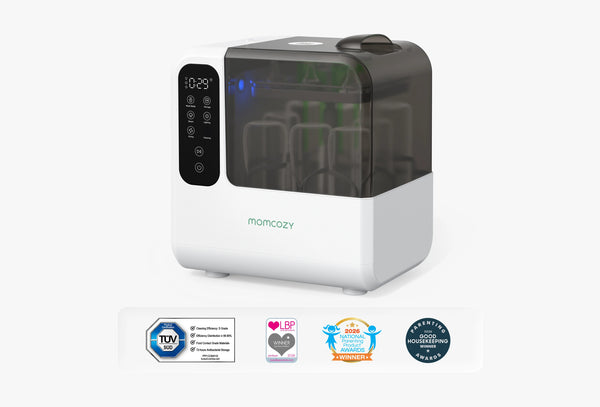 Member price
$359.99Kodem Zaoszczędź $30
 Member price
$374.99
$404.99Kodem Zaoszczędź 10% Member price
$364.99
$379.99Kodem Zaoszczędź 10% Member price
$384.99
$414.99Kodem Zaoszczędź 10% Member price
$369.99
$389.99Kodem Zaoszczędź 10%
Momcozy DeepClean Lite Baby Bottle Washer and Sterilizer
The Momcozy DeepClean Lite Baby Bottle Washer and Sterilizer provides another option for parents looking for an appliance that combines bottle washing and sterilization functions.

Momcozy KleanPal Pro Baby Bottle Washer and Sterilizer
The Momcozy KleanPal Pro Baby Bottle Washer and Sterilizer is another option for managing everyday feeding-equipment cleanup. Its combined washing and sterilizing functions can help streamline the routine. Member price
$299.99Kodem Zaoszczędź 10%

 Member price
$319.99
$344.99Kodem Zaoszczędź 15% Member price
$304.99
$319.99Kodem Zaoszczędź 15%
How to use a compatible bottle washer and sterilizer:
- Wash your hands.
- Empty any remaining breastmilk from the parts. Ensure all parts that came into contact with milk are separated.
- Ensure the parts you have are compatible with your pump by referring to the manufacturers instructions.
- Place the approved parts into the bottle cleaner following the instructions on how to load them.
- Add water and detergent as instructed.
- Choose the correct cleaning and sterilizing programme.
- Once the programme is complete (including drying if required), remove the parts.
- Ensure they are completely dry and place in a clean, safe place using clean hands.
Always check both the breast pump and washer manuals before loading pump accessories. A machine's ability to sterilize baby bottles does not automatically mean every breast pump component is compatible with it.
2. Use an Electric Steam Sterilizer
Electric steam sterilizers are also another great option to consider if you want to have a separate sterilizer.
This uses steam to help sterilize pump parts that are compatible with this method of sterilization, thereby reducing germs on them. This will not require you to have a pot of boiling water.
Momcozy offers several options for this type of routine:
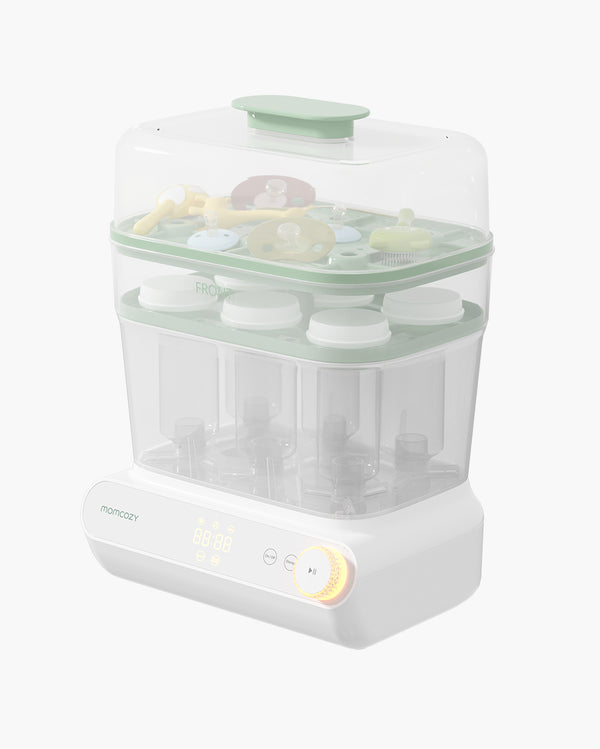
- Momcozy 4 in 1 Compact Bottle Sterilizer and Dryer: A compact option for parents who want a sterilizing appliance with a drying function.
- 8-in-1 Baby Bottle Steam Sterilizer: An electric steam sterilizer designed for infant feeding accessories.
-
Momcozy 3 Layers Fast Bottle Sterilizer and Dryer: A multi-layer option for organizing compatible feeding items during sterilization and drying.

 Member price$99.99
$119.99Kodem Zaoszczędź 10%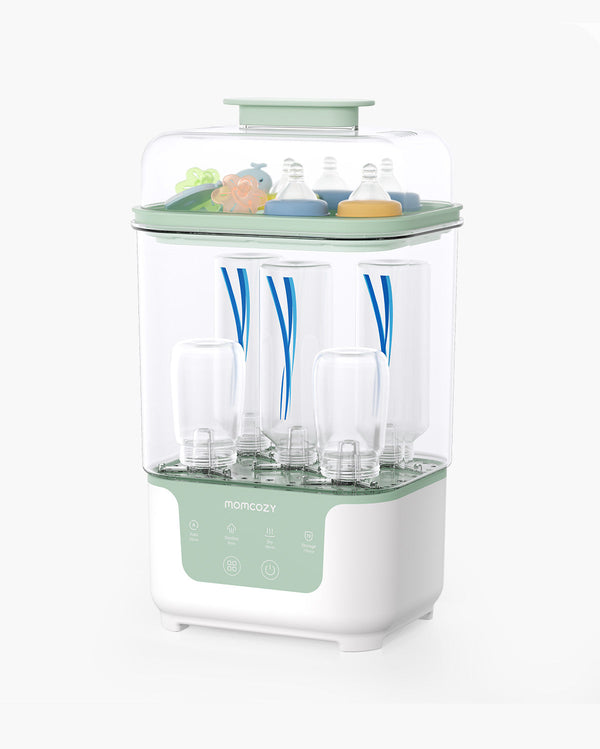 Member price$64.99Kodem Zaoszczędź 10%
 Member price$299.99Kodem Zaoszczędź 10%
How to sterilize breast pump parts using an electric steam sterilizer:
- Ensure all parts are washed and rinsed.
- Ensure all parts can be fully taken apart.
- Refer to the manufacturer's instructions and ensure all parts are suitable for steam sterilizing.
- Add the correct amount of water.
- Place the items in the sterilizer following the instructions on how to place them in the appliance.
- Choose the correct program.
- Ensure you allow the full cycle to complete.
- If the sterilizer has a drying function, allow this to complete.
- Take the items out using clean hands and place them into a clean dry area.
You can explore the available Momcozy baby bottle sterilizers to compare different appliance options.
 Member price
$99.99
$119.99Kodem Zaoszczędź 10% Member price
$64.99Kodem Zaoszczędź 10%
Member price
$299.99Kodem Zaoszczędź 10%
3. Boil Compatible Pump Parts
If your breast pump parts are heat safe then you can boil them. The CDC recommend you boil your heat safe parts for 5 minutes.
Follow these steps:
- Wash your hands and clean the parts
- Take apart all heat-safe milk-contact parts.
- Place the parts into a clean saucepan.
- Fill with enough water to fully cover the parts.
- Turn on the heat and bring the water to a boil. Boil for 5 minutes.
- Carefully take the parts out of the pan using clean tongs.
- Place the parts onto a clean, unused dish towel/paper towel.
- Leave to air dry fully.
Take care when dealing with hot water and parts. Allow it to cool down before touching. Do NOT boil the motors, electric parts, or any parts that have been identified by the manufacturer as not suitable for high temperatures.
4. Use a Dishwasher With a Sanitizing Setting
Some parts of your breast pump may be able to be cleaned in the dishwasher – always check with the manufacturer.
To clean your pump parts in the dishwasher:
- Take apart your pump. Empty any remaining milk.
- Put small pieces in a sealed basket or sieve.
- Add washing-up liquid as per your dishwasher instructions.
- Choose a hot wash with a heated dry or sanitize option.
- Leave to complete.
- Ensure all pieces are fully dry.
According to the CDC, using a dishwasher on a hot wash with a heated dry or sanitize will help reduce the need to sanitize baby feeding equipment (CDC).
If the parts do not dry fully in the dishwasher, leave them to air dry on a clean surface.
Do I Have to Sterilize My Breast Pump After Every Use?
You typically will not need to sterilize your pump parts each time you use them.
However, it is important to clean any parts that have touched your breast milk after each use to remove any buildup of breast milk. This will help reduce the risk of building up germs.
The CDC recommend to sanitize your pump parts at least once a day. This is especially important if your baby is under 2 months old, premature, or has a compromised immune system.
If your baby is healthy and older, you may not need to sanitize your equipment every day if it is being carefully cleaned after each use.
Always follow the guidelines given by the pump manufacturer, and take any additional precautions based on your baby’s health. If unsure, always ask your pediatrician or lactation professional.

How Often Do I Sanitize My Breast Pump?
For most parents, the recommended routine is to wash pump parts after every use and sanitize them at least once daily when additional protection is needed.
Here is a simple breakdown:
|
Cleaning task |
Recommended frequency |
|
Wash milk-contact parts |
After every use |
|
Sanitize pump parts |
At least once daily for extra protection |
|
Clean the wash basin and bottle brush |
After each use, with a more thorough wash at least every few days |
|
Inspect pump components |
Regularly and before use |
|
Replace damaged or contaminated components |
According to manufacturer guidance |
If you are pumping multiple times throughout the day, you don’t need to fully sterilize between uses unless advised by your health care provider or pump manufacturer.
The most important thing is to get into a routine. As long as your pump kit is being fully cleaned, dried, and safely stored, this will maintain good hygiene.
Do You Need to Dry Parts of Your Pump?
Yes! All parts should be fully dried.
Although the sterilization process will kill germs, leaving parts wet can create bacteria, and mold-friendly environments. They can become trapped in small parts such as valves and connectors.
According to the CDC, place the cleaned parts of your breast pump on a clean plate or paper towel to allow them to air dry. The area should be free from dust or dirt.
Try not to use a kitchen towel to speed up the process. This could cause the spread of germs and lint across your already cleaned parts.
If you have a machine with a drying function (like a compatible Momcozy bottle washer & sterilizer or electric sterilizer & dryer), then place it on a full drying cycle.
Ensure there is no visible dampness in small holes or awkward spots.
Can I reuse my breast pump?
In general, yes. As long as the parts are washed and dried after each use they can be reused.
You can reuse your pump parts as long as they are washed, rinsed and fully air-dried after every use. Replace any part that still has milk residue, shows mould, or is cracked or misshapen.
After each use:
- Take apart any parts that come into contact with your milk.
- Rinse off any leftover milk.
- Wash with soap and water.
- Rinse well.
- Leave to fully air dry.
- Keep in a clean, safe place.
Do not use any parts that still have milk on them, mold, or any sign of damage.
The CDC recommends that you do not share your personal breast pump. Even if you clean the outside, milk can get into parts that cannot be properly cleaned between users. Only share pumps that are designed to be used by more than one person. Each person should have their own compatible collection kit.
If you are using a second-hand pump, check the manufacturer's instructions to see if it is designed to be used by more than one person.

Conclusion
Breast pump sterilizing is an important part of maintaining a hygienic pumping routine, but it does not have to be complicated. Washing milk-contact components after every use, sanitizing them when recommended, allowing them to dry completely, and storing them safely can help reduce the risk of contamination.
Whether you prefer boiling, steam sterilization, or a compatible bottle washer and sterilizer, always follow your breast pump manufacturer's instructions. Not every component can withstand high temperatures or machine washing.
Momcozy has a number of bottle washers and sterilizers, which can help parents keep their feeding equipment simple. Choosing the right cleaning system will help you keep your pump routine running smoothly.


